
Top 5 high fiber food picks for IBS by an IBS dietitian
Fiber is a nutrient that most people with IBS or frequent gut issues can get a bit wary about. It seems that eating more fiber, while it’s supposed to be good for you, feels bad! More bloating, more diarrhea, perhaps feeling backed up more… and certainly more gas.
I remember talking to someone with IBS, who told me their symptoms almost disappeared while they were on a ketogenic diet for weight loss.
And while I’m not surprised to hear this, getting enough fiber is highly important also in IBS and even if you hear stories like this about low carbohydrate diets.
What is fiber?
Plant food components that can’t be digested are called fiber. While we humans don’t have the enzymes to break down food fibers, our gut microbes do. This is why you so readily get gassy or bloated after eating high fiber foods. (1)
There are many kinds of fiber, some are soluble and some insoluble. There are also differences in how quickly different fibers get eaten by gut microbes, called fermentability. During fermentation gut microbes make short chain fatty acids and other compounds that benefit our health. (1)
You can survive without fiber, which makes it a non-essential nutrient. But at the same time, if you want to live long and live healthy, this is when fiber becomes essential.
Those trillions of beneficial bacteria in the large intestine that keep you healthy and reduce the risk of chronic diseases need fiber as their food (1). Without fiber, these bacteria can’t thrive letting illness causing bacteria take over to cause inflammation and health issues. (2)
And, what’s more acutely important if you have digestive problems, is that fiber helps maintain the mucus layer in the intestines. Without fiber, the mucus layer thins out, which leads to increased permeability, sometimes called leaky gut. (2)
Here are my top picks for foods to eat on a weekly basis to not only increase fiber in your diet but also to increase other important nutrients that support your health and well-being.
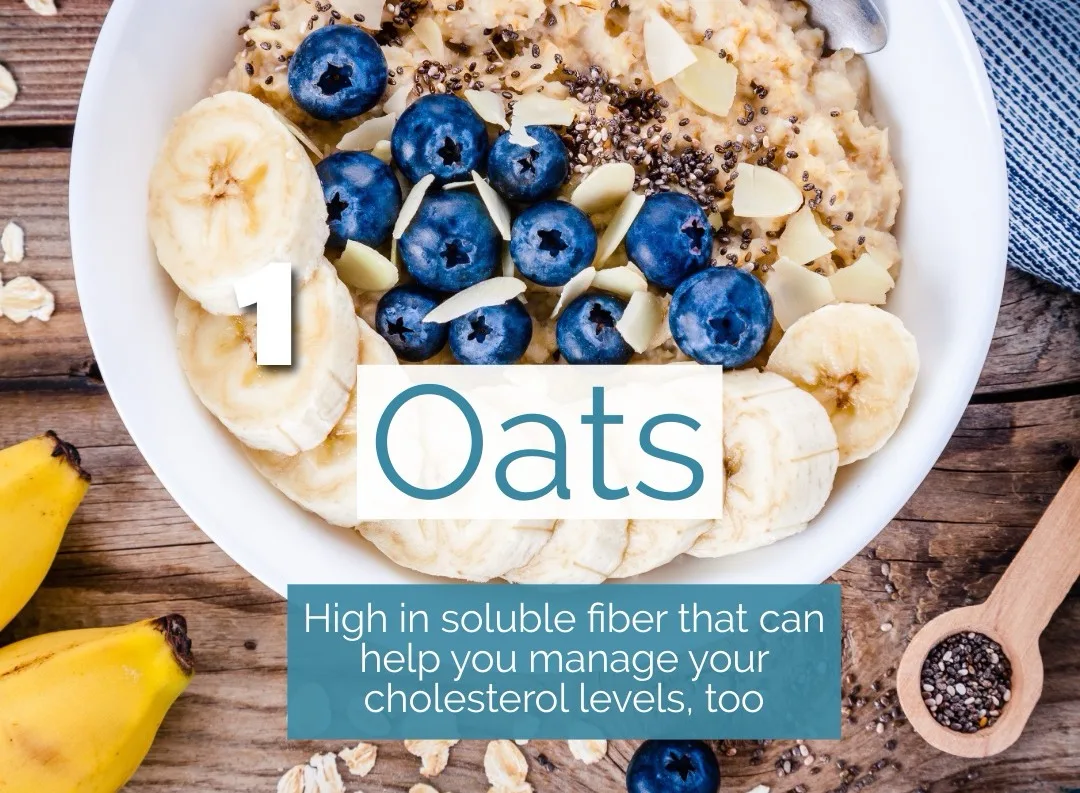
1. Oats
A gluten-free grain (if it’s not contaminated with gluten in processing or storage) that is a great source of soluble fiber. Soluble fiber is loved by your gut microbes and can help both diarrhea and constipation. It can even help reduce cholesterol levels: soluble fiber traps cholesterol and since it’s not digestible, it carries cholesterol out of the body and prevents it from being absorbed into the blood stream. (3)
Choose 100% whole grain oat bread or crispbread, boil oat kernels to use as a side dish like rice, or make them into oatmeal. Oatmeal is my go-to breakfast, but I have to admit it, it tastes very bland if you eat it plain. I always dress it up with dried fruit, nuts and seeds, cinnamon or cocoa powder, and milk or soymilk. Berries are wonderful in oatmeal, too. Of course, there are also many kinds of tasty muesli that you could have with yogurt or milk. Granola is made with oats, but tends to be more fatty and sugary making it taste amazing, but more of a dessert in my opinion.
1 cup of oatmeal contains 4 g of fiber.
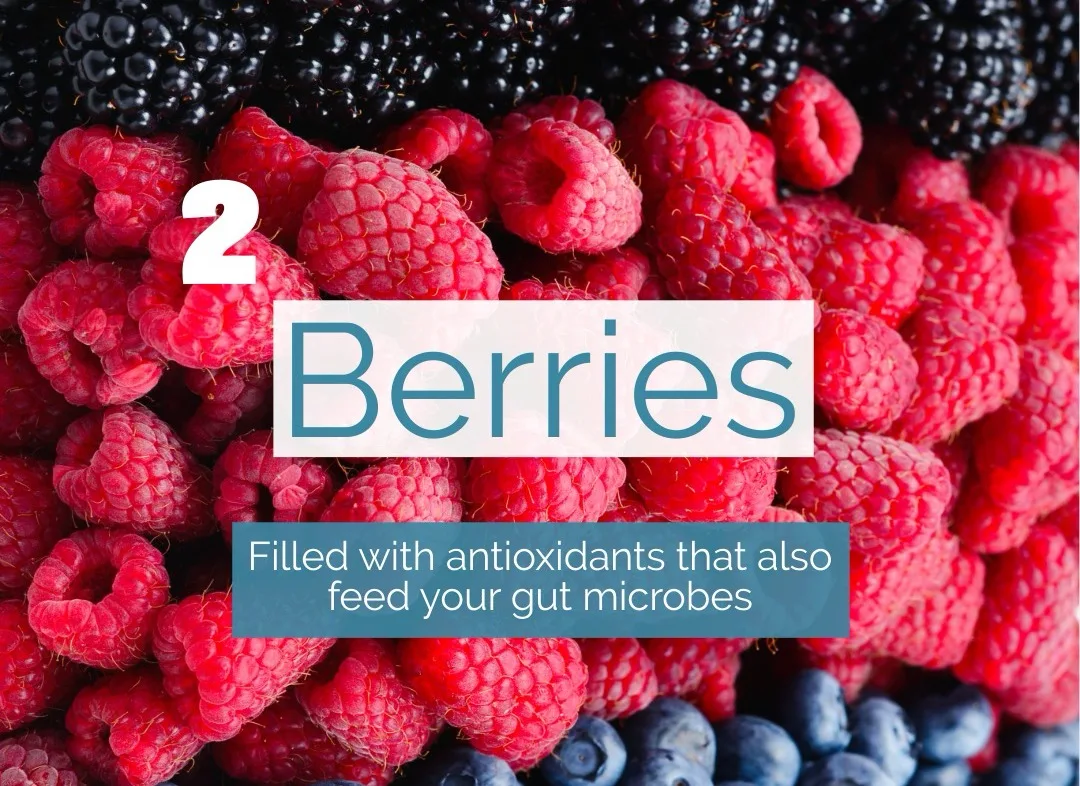
2. Berries
These plant foods are not just a source of fiber, but they are choc-full of antioxidant polyphenols. They help prevent damage in the body, and have an anti-inflammatory effect. What’s great is that the polyphenols also feed your friendly gut microbes. (4)
Vary them over the course of the week and you also get closer to reaching 30 plants a week, which has been connected to a thriving bacterial community in your gut (8).
1 cup of berries contains 3 g of fiber, raspberries even 8 g!
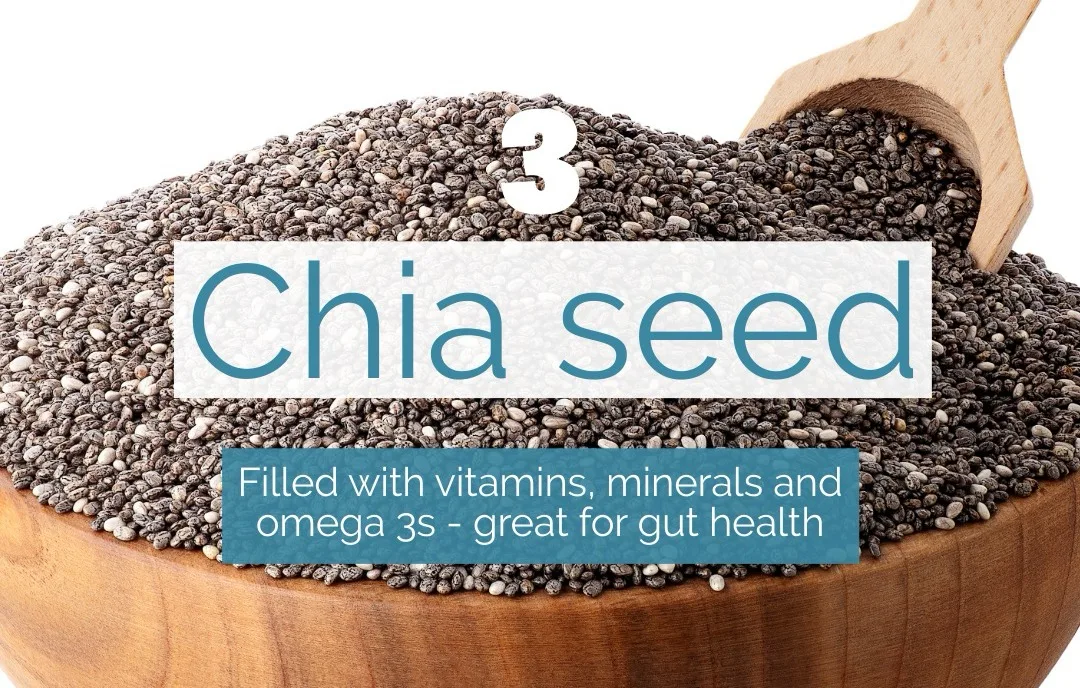
3. Chia seed
An amazing source of soluble fiber, these little seeds become like a gel when in contact with water. For this reason it’s best not to eat these raw on their own. You can top oatmeal or yogurt with chia seed: after adding, let them be for a few minutes and the seeds will draw water to themself and become plump.
Why I love chia seed also is that they are a great source of omega-3 essential fatty acid, as well as many vitamins and minerals. (5) Seeds in general are real nutrient powerhouses that to me are too often overlooked.
1 tablespoon of chia seed contain 3.5 g of fiber.
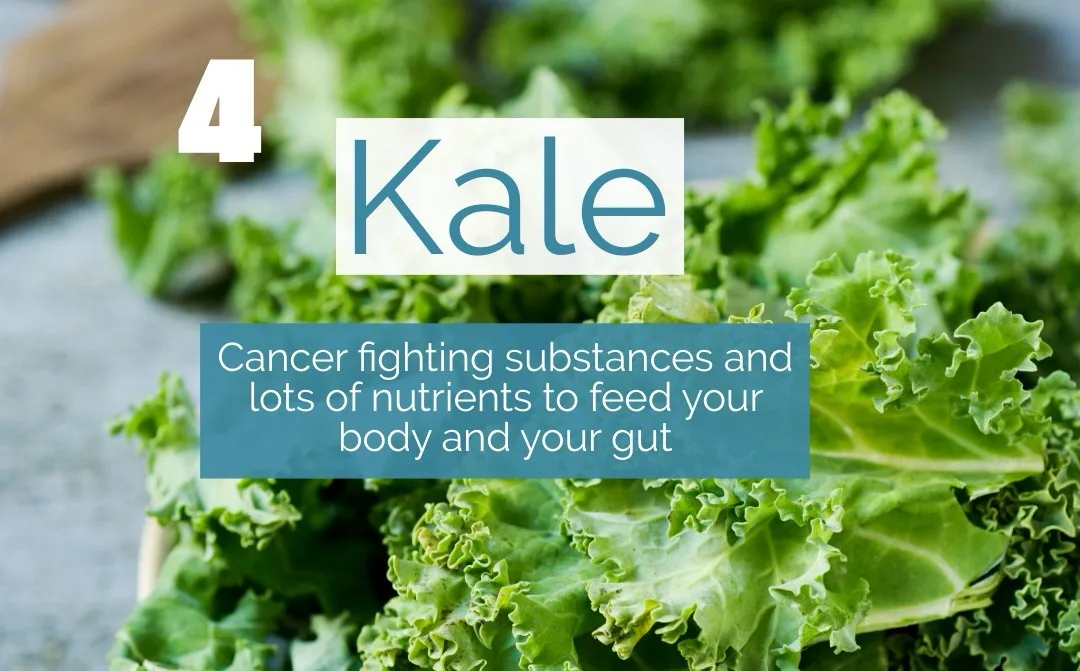
4. Kale
A dark, leafy green that is high in vitamin A and K, folate and iron. One reason why kale is on my list is because it belongs to the cabbage family and therefore contains a cancer-fighting substance called sulforaphane. (9) I remember my biology teacher in community college saying one should eat cruciferous veggies every other day to reduce the risk of cancer. I haven’t fact-checked this claim, but nevertheless it’s not a bad idea.
A recent study also showed that kale helps improve constipation and has beneficial effects on the gut microbiota (6).
I love to eat kale steamed or baked into chips, and I also often add it to soups.
1 cup of cooked kale contains 4 g of fiber.
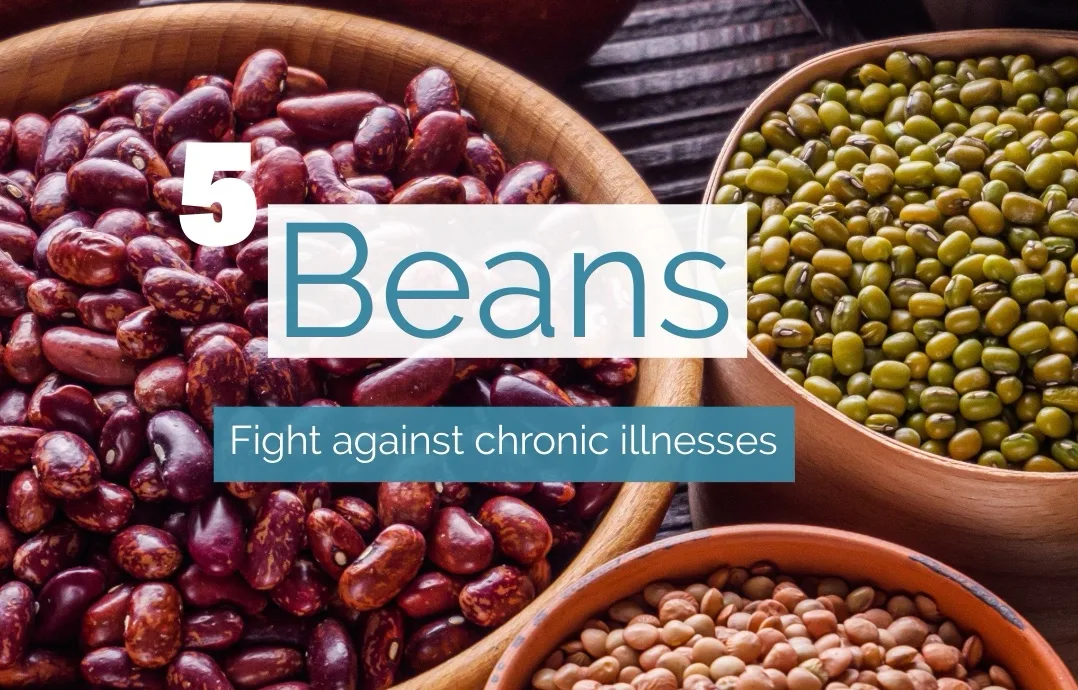
5. Beans. I know many of my readers will now feel doubtful as beans are a strongly gas-inducing food and even people without chronic digestive issues know what happens when you eat a bowl of chili or a big bean burrito. I’m adding beans to this list fully aware that they are a high FODMAP food and avoided by many people with IBS because of this.
However, I have a few good reasons for recommending them.
Firstly, they really are a great source of fiber. They are linked to improved health reducing the risk of chronic illnesses, including diabetes and heart disease. They are high in nutrients, like iron and magnesium, and they also contain antioxidants. (7) Beans are so great for you and so I’m a bit sorry to see them shunned for their gas-producing properties.
½ cup of beans contain on average 6 g of fiber.
How to eat fiber without the unwanted digestive consequences?
There’s a way to eat beans and not get the bloat or the gas afterward. Or at least less of it. Most importantly, amount matters!
If you almost never eat beans and suddenly have a bean soup or something like this, anyone will feel the consequences. Or, if you find that beans always cause digestive trouble, reduce the amount you are eating at one time. Canned, drained and rinsed beans are also lower in quickly fermentable fibers called FODMAPs and may cause less gas.
What I recommend is that you start with just a tablespoon of beans every day in either case. This way your gut gets used to the type of fiber beans contain, and slowly you can increase the amount.
Also remember that the symptoms from eating beans are not dangerous. Gas, bloating and more frequent BMs are just a sign that you are feeding your gut microbes and that they are happy. You may be getting symptoms, but even then you are supporting the health of your body.
Start low and go slow -tip applies to any kind of fiber in fact. There’s a chance that you need more, as the daily need of fiber is 25-38 g per day, but only about half of the people in America get enough. (1) (I can check that for you if you’d like, just go here)
So, make sure to eat fiber-rich foods on every meal, increasing the amount slowly with time to avoid most of the unwanted gut symptoms that fiber tends to cause.
However, you don’t need to, and should not, limit yourself to just these foods. At the end of the day, all whole grains, legumes, vegetables, fruit, nuts and seeds have healthy fibers. But with the above picks, you don’t just get fiber, but you also get so many other healthy nutrients that keep your body well.
Which one is your favorite?
Love,
Anna-Kaisa
PS. FODMAPs are fibers that are often avoided and many doctors recommend a low FODMAP diet to people with IBS. But is this a good idea? I’m leaning toward “no” rather than “yes”. Read here why I think this way.
PPS. Would you like to know if you are getting enough fiber to support your digestive health and to reduce the risk of chronic illnesses? I’d be happy to check your food diary and tell you exactly how you are doing with that.
USDA Nutrient Database was used for fiber content information.
- Daley SF, Shreenath AP. The Role of Dietary Fiber in Health Promotion and Disease Prevention: A Practical Guide for Clinicians. 2025 Dec 1. In: StatPearls [Internet]. Treasure Island (FL): StatPearls Publishing; 2026 Jan–. PMID: 32644459.
- Makki K, Deehan EC, Walter J, Bäckhed F. The Impact of Dietary Fiber on Gut Microbiota in Host Health and Disease. Cell Host Microbe. 2018 Jun 13;23(6):705-715. doi: 10.1016/j.chom.2018.05.012. PMID: 29902436.
- Paudel D, Dhungana B, Caffe M, Krishnan P. A Review of Health-Beneficial Properties of Oats. Foods. 2021 Oct 26;10(11):2591. doi: 10.3390/foods10112591. PMID: 34828872; PMCID: PMC8625765.
- Aguilera JM. Berries as Foods: Processing, Products, and Health Implications. Annu Rev Food Sci Technol. 2024 Jun;15(1):1-26. doi: 10.1146/annurev-food-072023-034248. Epub 2024 Jun 20. PMID: 37989130.
- Agarwal A, Rizwana, Tripathi AD, Kumar T, Sharma KP, Patel SKS. Nutritional and Functional New Perspectives and Potential Health Benefits of Quinoa and Chia Seeds. Antioxidants (Basel). 2023 Jul 12;12(7):1413. doi: 10.3390/antiox12071413. PMID: 37507952; PMCID: PMC10376479.
- Nishimoto Y, Salim F, Yamauchi Y, Mori Y, Murakami S, Suzuki A, Fukuda S, Yamada T. Kale improves bowel movements in constipated women and affects some intestinal microbes and metabolites: a pilot study. Front Nutr. 2023 Nov 29;10:1247683. doi: 10.3389/fnut.2023.1247683. PMID: 38094924; PMCID: PMC10717843.
- Grdeń P, Jakubczyk A. Health benefits of legume seeds. J Sci Food Agric. 2023 Aug 30;103(11):5213-5220. doi: 10.1002/jsfa.12585. Epub 2023 Apr 10. PMID: 36988580.
- McDonald D, Hyde E, Debelius JW, Morton JT, Gonzalez A, Ackermann G, Aksenov AA, Behsaz B, Brennan C, Chen Y, DeRight Goldasich L, Dorrestein PC, Dunn RR, Fahimipour AK, Gaffney J, Gilbert JA, Gogul G, Green JL, Hugenholtz P, Humphrey G, Huttenhower C, Jackson MA, Janssen S, Jeste DV, Jiang L, Kelley ST, Knights D, Kosciolek T, Ladau J, Leach J, Marotz C, Meleshko D, Melnik AV, Metcalf JL, Mohimani H, Montassier E, Navas-Molina J, Nguyen TT, Peddada S, Pevzner P, Pollard KS, Rahnavard G, Robbins-Pianka A, Sangwan N, Shorenstein J, Smarr L, Song SJ, Spector T, Swafford AD, Thackray VG, Thompson LR, Tripathi A, Vázquez-Baeza Y, Vrbanac A, Wischmeyer P, Wolfe E, Zhu Q; American Gut Consortium; Knight R. American Gut: an Open Platform for Citizen Science Microbiome Research. mSystems. 2018 May 15;3(3):e00031-18. doi: 10.1128/mSystems.00031-18. PMID: 29795809; PMCID: PMC5954204.
- Satheesh, N., & Workneh Fanta, S. (2020). Kale: Review on nutritional composition, bio-active compounds, anti-nutritional factors, health beneficial properties and value-added products. Cogent Food & Agriculture, 6(1). https://doi.org/10.1080/23311932.2020.1811048

Related Posts



Related Posts